Even Water Trembles at a Sound — Low-Frequency Fire Extinguishers and the Physics of Singing Bowl Water
Rub the rim of a singing bowl and the water inside leaps without a hand touching it. Students who put out flames with 30–60Hz bass, MIT physicists filming ripples in a bowl — sound is invisible, not weightless. And words are sound, too.
Even Water Trembles at a Sound
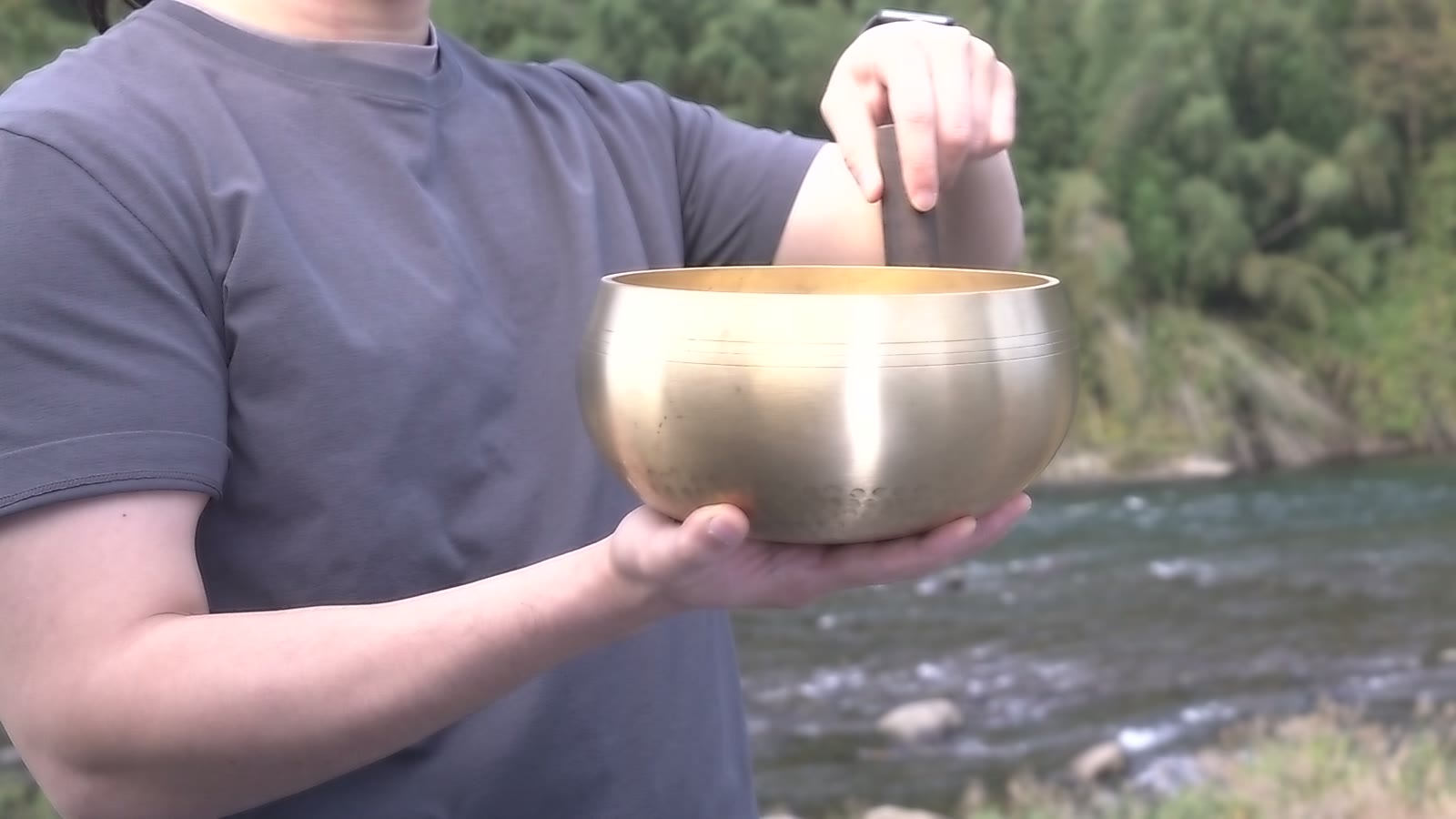
October, by the river.
Pour a little river water into a singing bowl. Begin to rub the rim, slowly. At first the surface wrinkles with fine lines. As the tone builds, the water stands up in ridges — and then it leaps. Droplets jump clear of the surface.
No hand ever touched the water. Sound did that.
Sound is a push
We tend to think of sound as something we hear. Physically, it is air being pushed and pulled, over and over. And a push is a force.
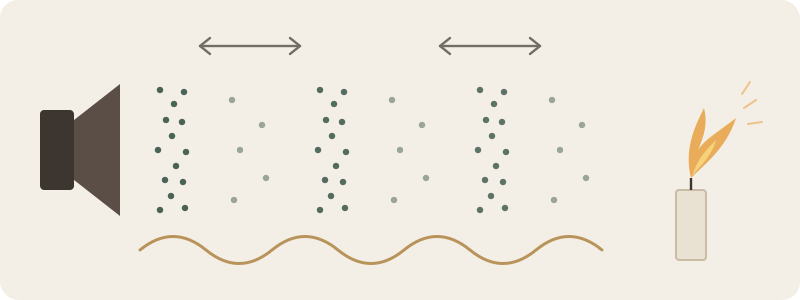
Low sound packs the air tight, then lets it thin out, again and again. That swing is what scatters a flame.
In 2015, two engineering students at George Mason University built a fire extinguisher out of a speaker, an amplifier and a cardboard tube. High-pitched tones did nothing to the flames. What worked was deep bass, between 30 and 60Hz. Low sound moves air in big, heavy swings — enough to scatter the oxygen and fuel a flame lives on.
DARPA, the US defense research agency, had already tested the same idea: speakers on either side of a flame, an acoustic field that sped up the surrounding air and thinned the layer where burning happens. The idea is older still — Lord Rayleigh was already writing about sound-driven vibrations and flames in the nineteenth century.
It only works on small fires so far. But it makes one thing plain: sound is invisible, not weightless. It moves matter.
Why the water in a singing bowl jumps
In 2011, physicists at MIT filled singing bowls with water and filmed what happened. Rubbing the rim sets the bowl's wall vibrating. That vibration meets the water and raises a regular pattern of standing ripples — Faraday waves. Rub a little firmer and the waves break, flinging droplets into the air. Some drops even hover on the trembling surface, or bounce and skip across it.
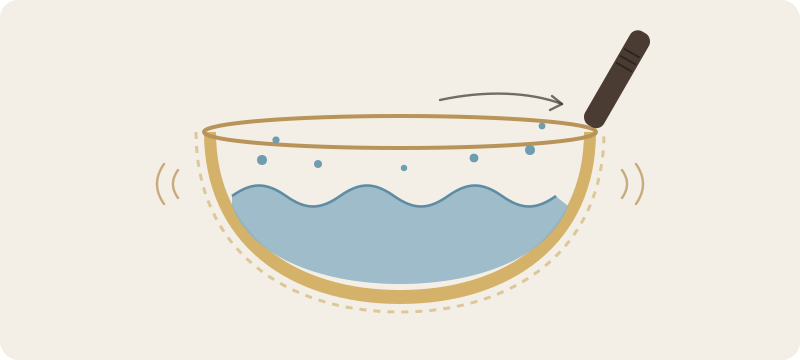
Rub the rim and the wall trembles; regular ripples rise on the water until droplets leap free.
It is the same principle as a wet finger circling the rim of a wine glass. A bowl simply sings lower, so the same effort sets it trembling far more easily.
Your body hears low sound first
If you have ever stood near the speakers at a concert, you know the bass reaches your chest before your ears. Low sound does not stop at the eardrum. It moves skin, ribs, the whole body — a little like water in a bowl.
Words are sound, too
If water trembles at a sound, why would a heart be any different?
Some words stay with us all day. A passing remark at noon can still be echoing in us at night. The words you heard — those you can let ripple away, the way the river takes back the water you borrowed.
The words you speak are another matter. The first ears they reach are always your own. A harsh sound thrown at someone else rings inside you first, and lingers longest there.
What words stirred you today?
SUMMARU is a place to let those ripples settle — river water, the long hum of a bowl, and time for the surface to go still again.
Sources: George Mason University news (2015) · ScienceDaily on DARPA's acoustic fire suppression research (2012) · D. Terwagne & J. W. M. Bush, "Tibetan singing bowls," Nonlinearity 24 (2011)
SUMMARU